Free monograph · 8 pages
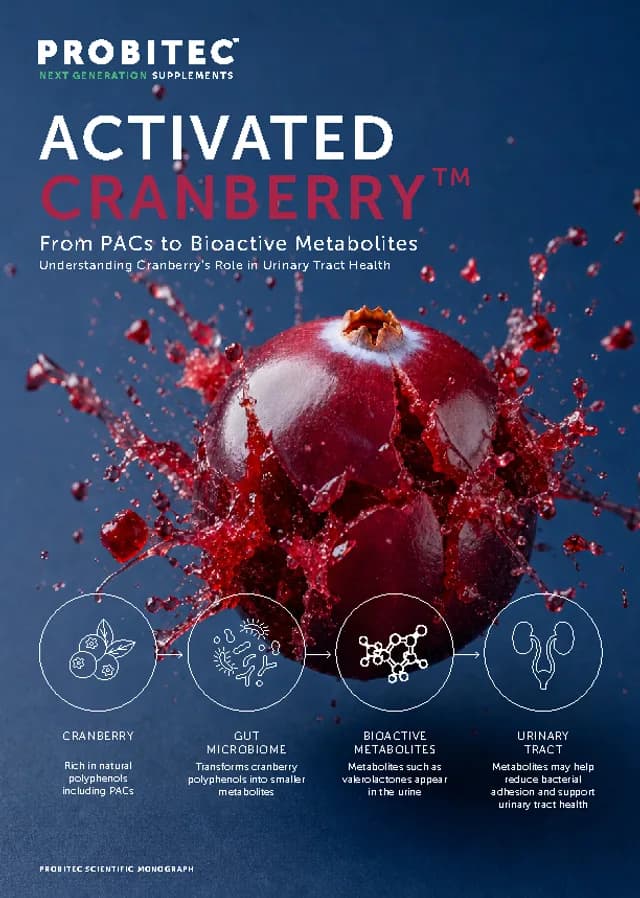
Activated Cranberry
From PACs to bioactive metabolites: understanding cranberry's role in urinary tract health
Cranberry science has changed. Early theories said cranberry acidified the urine. Later research identified A-type proanthocyanidins (PACs) and their effect on bacterial adhesion. The newest evidence suggests the gut microbiome transforms cranberry polyphenols into smaller metabolites that appear in urine.
This short monograph traces that shift, explains why PAC dose and whole-cranberry composition matter, and summarises the human clinical evidence for a cranberry phytosome.
Inside this monograph
- How cranberry science moved from urine acidification to anti-adhesion
- Why PAC dose matters, and the 36 mg research benchmark
- How gut bacteria transform cranberry polyphenols into urinary metabolites
- Human clinical evidence for a cranberry phytosome
- First-generation versus next-generation thinking about cranberry
Written for healthcare professional education and free for anyone to read. It is general education, not medical advice or a treatment guideline. Speak to a healthcare professional about your own symptoms.
Prefer a shorter read? Cranberry and Urinary Health covers the essentials in plain language.